
Managing knee arthritis often involves low-impact exercises that strengthen surrounding muscles and improve stability without excessive strain. Discovering movements that support your knee health is crucial for overall well-being, and you can find more resources at Generate The Happiness.
Key takeaways
- Low-impact exercises like swimming and elliptical training can help strengthen muscles around the knee joint without putting excessive strain on it.
- Exercises such as standing hip abductions and hamstring stretches can improve stability, balance, and flexibility, which are important for managing knee arthritis.
- A combination of exercise, weight management, and self-management strategies is recommended by experts to improve outcomes for individuals with knee arthritis.
Exercise is a deeply personal journey, and while a healthcare professional offers tailored guidance, certain foundational, low-impact movements can profoundly benefit many, especially those navigating the complexities of arthritis.
Arthritis, encompassing forms like osteoarthritis (OA), rheumatoid arthritis (RA), and psoriatic arthritis (PsA), can manifest its impact on the knees, presenting unique challenges.

Share on Pinterest
FG Trade/Getty Images
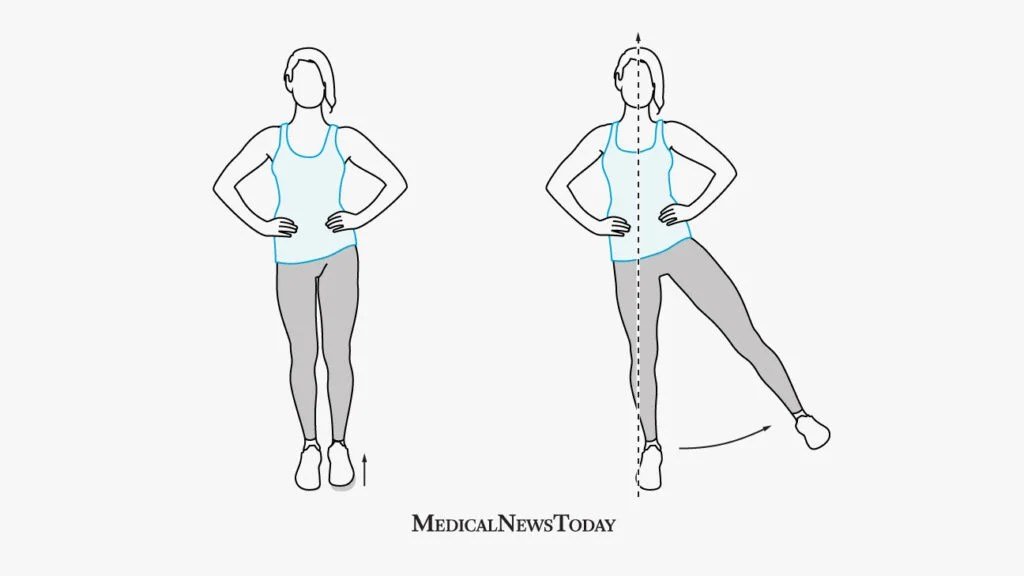
1. Standing Hip Abduction
Share on Pinterest
Art by Diego Sabogal
Standing hip abductions are a cornerstone for cultivating stability, enhancing balance, and fortifying the muscles that support your knees. By engaging the lateral glutes, these movements help redirect undue stress away from the knee joint.
Steps
- Stand near a wall or chair, using it for support if needed.
- Gently raise one leg to the side, ensuring your toes point forward or slightly inward, avoiding any rotation.
- Maintain an upright posture, resisting the urge to lean into your stationary leg.
- Slowly lower the raised leg.
- Repeat 15 to 20 times on each side.
Practice of Presence
The Insight: These movements acknowledge the subtle yet vital role of hip strength in knee well-being.
The Resonance: Feel the quiet strength unfurling in your hips, a gentle anchor for your entire lower body.
The Gentle Action: As you perform each lift, consciously breathe into the sensation of stability, grounding yourself in the present moment.
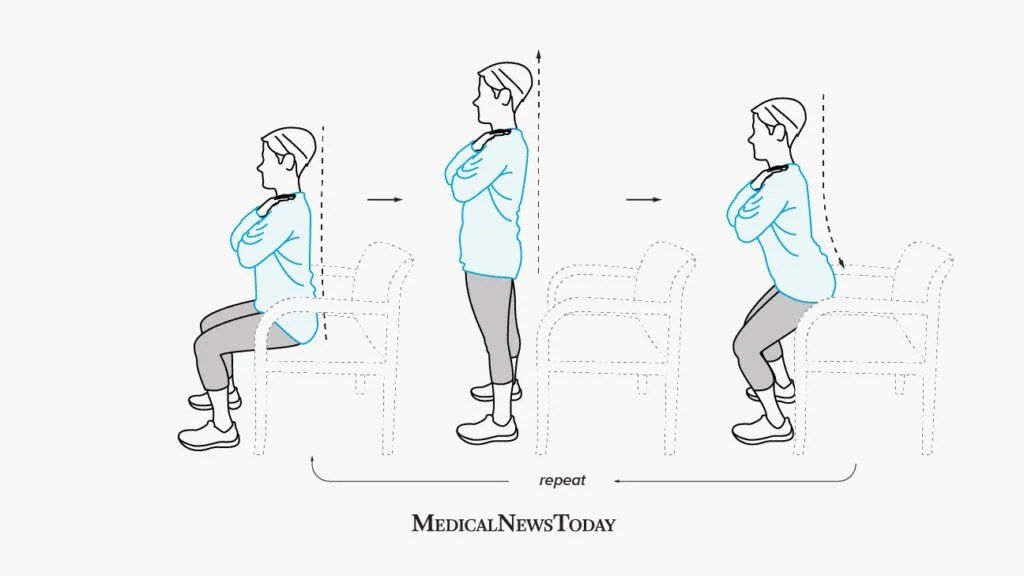
2. Sit and Stand
Share on Pinterest
Art by Diego Sabogal
The simple act of sitting and standing is a powerful exercise, awakening the quadriceps and glutes. This rhythmic motion fosters improved knee flexibility and bolsters leg strength, gradually easing the discomfort associated with rising.
Steps
- Sit upright in a chair with your feet flat on the floor.
- Gently cross your arms over your chest.
- Slowly rise to a standing position.
- With control, return to a seated position.
- Repeat this movement for 1 minute.
Practice of Presence
The Insight: This exercise teaches us to honor the fundamental act of rising and settling, finding grace in everyday transitions.
The Resonance: Feel the gentle unfolding and folding of your legs, a dance of strength and surrender.
The Gentle Action: As you stand and sit, become aware of the subtle shifts in your body, embracing each phase with mindful intention.
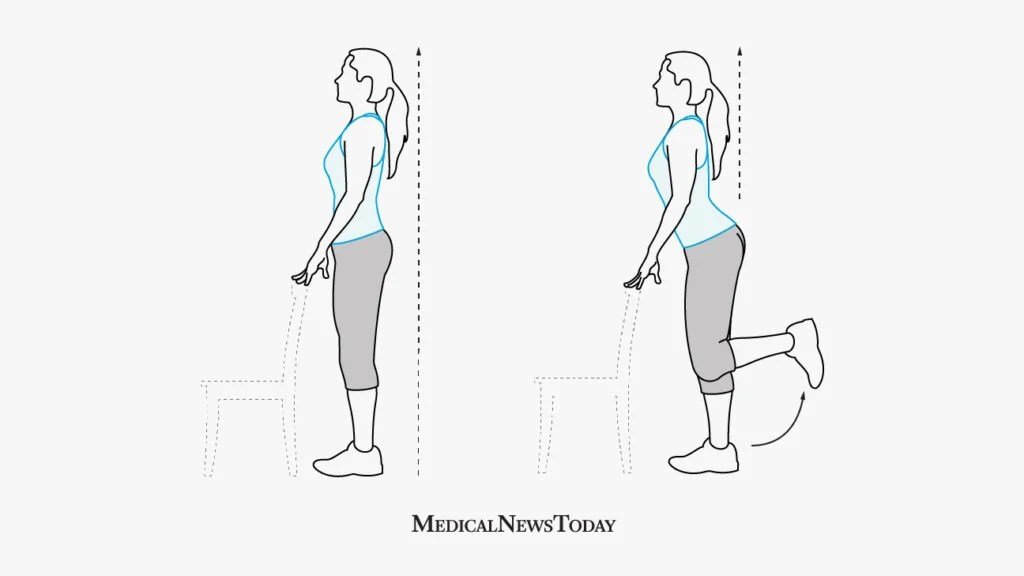
3. Standing Knee Flexion
Share on Pinterest
Art by Diego Sabogal
Standing knee flexion is a gentle way to awaken the hamstrings and ease stiffness. By strengthening the muscles at the back of your thigh, you unlock greater leg mobility and reduce the feeling of constriction around the knee.
Steps
- Stand tall and bring one foot backward, bending the knee to draw your heel towards your buttocks.
- Hold this gentle flexion for a few moments, ensuring your knees align and your posture remains upright.
- Slowly return the leg to its starting position.
- Repeat 10 to 25 times per session, performing these sessions a few times daily.
Practice of Presence
The Insight: This movement honors the often-overlooked hamstrings, recognizing their crucial role in knee comfort.
The Resonance: Feel the subtle lengthening and release in the back of your leg, a whisper of newfound flexibility.
The Gentle Action: With each repetition, focus on the breath as it flows through your body, a steady rhythm guiding the movement.
4. The Clam
Share on Pinterest
Art by Diego Sabogal
The clam exercise, performed lying down, is a profound way to strengthen the gluteal muscles. Weakness in these essential muscles can lead to the knee joints bearing an excessive shock; by fortifying the glutes, we can significantly lessen the impact on the knees.
Steps
- Lie on your side, bending your hips and knees to a 90-degree angle, ensuring your shoulders, hips, and feet are aligned.
- Keep your feet together.
- Lift your top knee upwards as far as comfortable, avoiding any backward rotation of your trunk, then slowly lower it.
- Hold the gentle stretch for 3 to 5 seconds.
- Repeat on the other side, aiming for 10 to 25 repetitions, twice daily.
Practice of Presence
The Insight: This exercise reminds us that strength often originates from seemingly small, foundational muscles.
The Resonance: Feel the quiet power building in your hips, a subtle yet potent force supporting your knees.
The Gentle Action: As you open and close your legs, breathe deeply, allowing the sensation of stability to radiate through your core.
5. Quadriceps Stretch
Share on Pinterest
Art by Diego Sabogal
The quadriceps stretch is essential for enhancing flexibility and expanding the range of motion within the quadriceps and knee joint. While typically performed lying down, modifications using a chair or wall for support can be made for comfort.
Steps
- Lie face down, supporting yourself with your right forearm.
- Bend your left knee and gently grasp your ankle or shin with your left hand.
- Slowly lift your knee until you feel a mild, distinct stretch in your quadriceps.
- Hold this position for a few moments.
- Switch sides and repeat the stretch a few times on each side.
Practice of Presence
The Insight: This stretch invites us to release tension held in the front of the thigh, allowing for greater ease of movement.
The Resonance: Feel the gentle unfolding in your quadriceps, a release of held patterns.
The Gentle Action: With each breath, consciously soften the muscles being stretched, surrendering to the sensation of release.
6. Hamstring Stretch
Share on Pinterest
Art by Diego Sabogal
The hamstring stretch is vital for improving the suppleness of the hamstrings and enhancing knee mobility. If lying down poses a challenge, this can be gracefully adapted by performing the stretch while seated, extending one leg forward with the heel on the floor and gently tilting the hips.
Steps
- Lie on your back with your legs extended.
- Bend your right knee and grasp the back of your thigh with both hands.
- Gently draw your leg towards your chest, then relax your arms, allowing your knee to point upwards.
- Straighten your leg towards the ceiling as much as comfortable, holding for 10 to 20 seconds.
- Bend the knee again, then repeat the straightening motion.
- Perform on the other side.
Practice of Presence
The Insight: This stretch encourages us to embrace the fluidity of our hamstrings, supporting the natural movement of the knee.
The Resonance: Feel the gentle lengthening in the back of your legs, a sensation of space and ease.
The Gentle Action: As you hold the stretch, visualize your breath flowing into the hamstrings, softening and releasing any tightness.
7. Elliptical Training
Elliptical training offers a low-impact cardiovascular experience, a gentle alternative to running or jogging for those with knee sensitivity. The Arthritis Foundation suggests machines with adjustable incline and resistance, along with dual handlebars, to optimize comfort and balance.
8. Recumbent Cycling
Cycling, inherently less impactful than walking or running, becomes even more supportive on a recumbent bicycle. Its design lessens the weight and strain on the knees by offering greater body support compared to traditional bikes.
9. Swimming
The buoyancy of water offers a profound sanctuary for joints affected by arthritis. Swimming and other aquatic exercises allow the water to support much of your body weight, significantly reducing the load on joints and muscles. Even gentle aerobic movements in shallow water can yield substantial benefits.
10. Tai Chi and Yoga
These meditative mind-body practices offer a holistic approach to managing arthritis pain. Both tai chi and yoga weave together breathwork, meditation, and gentle movement to cultivate muscle strength, flexibility, and balance. This integrated practice can also nurture mental well-being, potentially mitigating anxiety and depression.
While research continues to illuminate the benefits of these practices, some studies suggest tai chi can be an effective intervention for managing knee OA symptoms, though the quality of research varies.
Before Starting
Before embarking on any new exercise regimen, a dialogue with your doctor is paramount. Beyond their counsel, consider these mindful approaches:
- Begin Gently: Listen intently to your body’s signals, pausing if any discomfort arises.
- Integrate Movement Daily: Weave gentle movements throughout your day to maintain joint suppleness, rather than relying solely on intense, isolated sessions.
- Sustain Your Practice: Continued exercise, even after symptoms improve, is key to long-term well-being and preventing recurrence.
- Honor Pain: Seek medical advice for any severe or changing pain, as your exercise plan may require adjustment.
As you grow accustomed to these movements, they can seamlessly integrate into your daily life, performed during chores or while seated. The overarching principle for knee arthritis is to embrace low-impact activities that foster strength, flexibility, and stamina.
Ultimately, any movement practice for knee pain stemming from arthritis should be gentle, accessible, and contribute to building strength, enhancing flexibility, or increasing stamina.
Knee Arthritis and Medicare
For those experiencing knee pain, whether diagnosed with arthritis or not, Medicare may offer valuable support. Available to individuals over 65 and younger people with qualifying conditions, Original Medicare (Parts A and B) covers hospital care, outpatient appointments, diagnostic tests, and certain preventive services.
Your Medicare plan can facilitate consultations with doctors and specialists, including access to physical therapy, to address knee pain.
»Learn more:All about Medicare: Everything you need to know
Why Exercise?
Relying solely on medication is often insufficient for managing knee arthritis. Experts advocate for a multifaceted approach, integrating:
- Weight management, to alleviate stress on the joints.
- Self-management programs, empowering individuals with strategies for living well with arthritis.
- Education about arthritis and joint protection techniques.
- Cognitive behavioral therapy (CBT), to navigate pain, mood fluctuations, and fatigue.
- Fitness and consistent exercise.
Alongside regular, low-impact activities like tai chi, yoga, and swimming, consider these foundational practices:
- Maintaining a healthy weight.
- Cultivating balance to prevent falls.
- Strengthening the muscles surrounding the joints.
Exercise also profoundly benefits mental health and can foster social connections, depending on the setting.
Summary
Exercise stands as a cornerstone of arthritis management. Regular engagement in aerobic and strengthening activities may not only alleviate knee arthritis pain but also enhance mobility and overall strength, paving the way for a more vibrant and active life.
Embracing these movements can lead to significant improvements in knee comfort and function, and we encourage you to explore more valuable health and wellness content within our Blog.